The University of Kisubi (UniK) has institutionalized the Servant Leadership Programme (SLP) to address a critical leadership gap where technical expertise often lacks a corresponding ethical foundation and emotional intelligence. Grounded in the Catholic ethos, the program aims to nurture transformative leaders who prioritize integrity, compassion, and accountability. It is designed to be responsive to both national and global needs by providing holistic, evidence-based education that goes beyond academic excellence to include essential soft skills and professional practice.
The fundamental goal of the program is to promote leadership as a form of “servanthood,” where the primary focus is putting oneself at the service of God and the community.
- The 7 Pillars of Servant Leadership: The curriculum is built around seven core attributes: leading with moral authority, compassionate collaboration, skilled communication, putting people first, systems thinking, character, and foresight.
- Tenets of Synodality: These pillars are supported by the mindsets of Synodality, including courage to change, humility, hope, discernment, dialogue, and a sense of belonging.
- Social Transformation: The program seeks to uphold human dignity and promote sustainable leadership within the Church, society, and the broader global community.
Target Audience
The program targets a diverse range of stakeholders, including:
- Educational & Corporate Sectors: Managers, administrators, and staff in schools, universities, and businesses.
- Public & Civil Society: Leaders in government, NGOs, and Community-Based Organisations (CBOs).
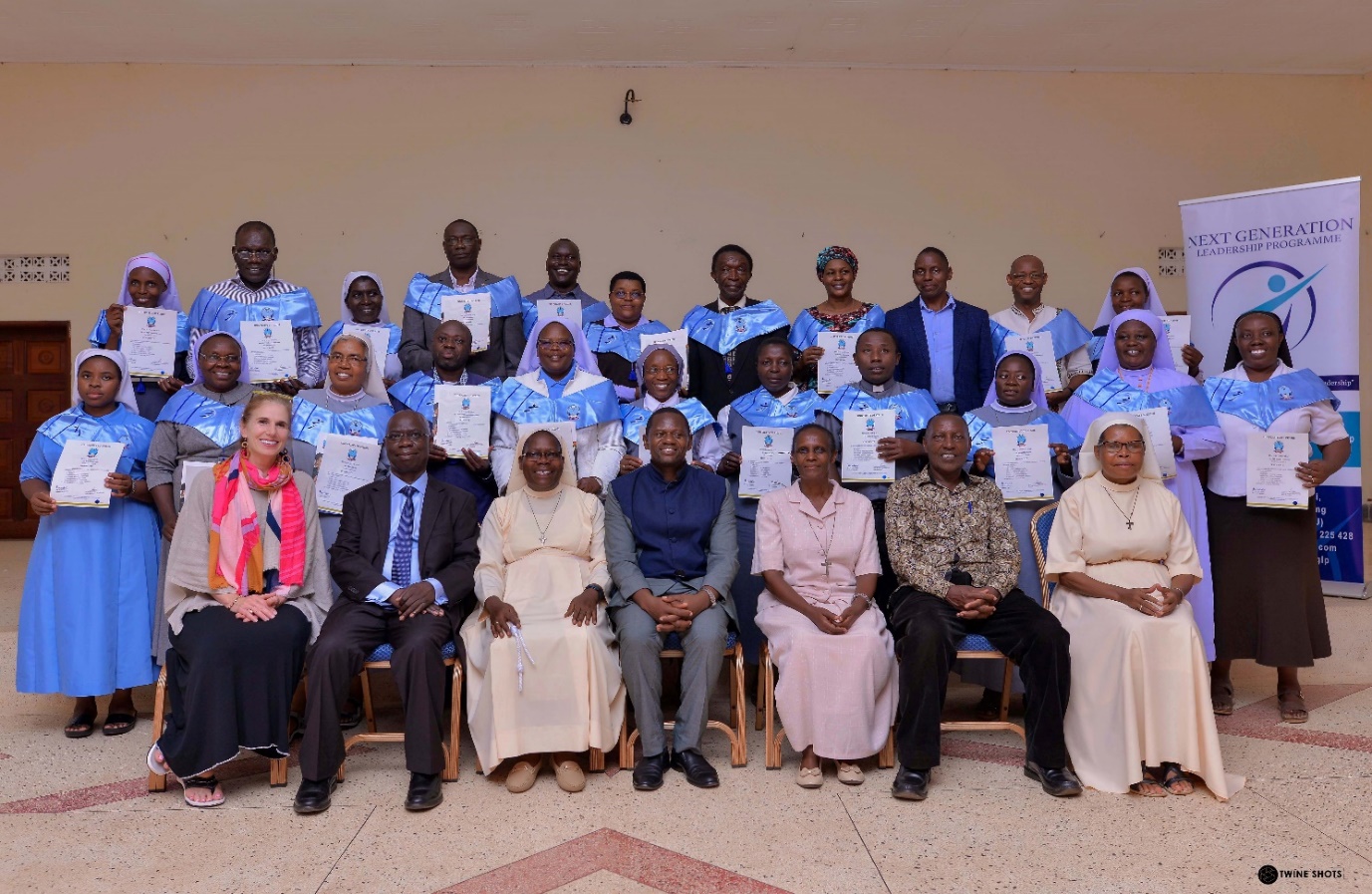
To date, over 1,200 individuals have completed the program, gaining the practical skills and ethical grounding necessary to drive positive change and leadership confidence within their respective institutions.
Unique Value Proposition
Unlike traditional management courses that focus heavily on theoretical frameworks and organisational structures, UniK’s SLP emphasizes personal development and ethical considerations. The program includes a strong mentorship component, pairing participants with experienced servant leaders to provide guidance and support. By fostering a “bottom-up” approach rooted in trust and open communication, it empowers leaders and followers to raise one another to higher levels of motivation and morality
What makes this programme unique compared to standard university courses or leadership styles is its distinctive focus on the leader as a facilitator. Key differentiators include:
- Priority on Human Needs: The programme emphasises serving the wider community and empowering team members to reach their full potential.
- Supportive Environment: It promotes a “bottom-up” approach rooted in trust, collaboration, and open communication.
- Skill Development: Leaders are trained in empathy and deep listening to genuinely understand the perspectives of their teams.
- Mentorship and Ethics: Unlike theoretical frameworks that focus on management techniques, this programme integrates mentorship and places a heavy emphasis on personal development and ethical considerations.
- Shared Power: The focus remains on sharing power and helping the entire group succeed together.
Core Modules of the Program
The program is built upon strategic tenents (Modules) that ensure participants do not just learn about leadership, but embody it:
MODULE | FOCUS AREA |
1. Synodality and the transforming church | Introduces participants to the concept of synodality-walking together as a community in discernment and mission. Rooted in the evolving life of the Church, it emphasizes listening, inclusion, courage and shared responsibility |
2. The shifting paradigm of leadership | Participants explore the transition from traditional, authority-driven leadership models to servant and values-based leadership. The module challenges participants to identify their leadership paradigm shift |
3. Leading for the mission | Focuses on principles and practices of servant leadership that fit with the shifting paradigm of leadership as well as the Gospel values |
4. Personal and spiritual development (Personal & Spiritual Leadership) | Participants gain perspective of their own life journey and personal values they hod; identify theories of human development and spiritual development. Participants deepen their sense of identity, vocation, and ethical grounding. |
5. Leading with emotional intelligence (Emotionally Intelligent Leadership at workplace) | Equips participants with the ability to understand and manage emotions in decision making. People with emotional intelligence lead effectively in diverse teams and complex human environments. |
6. Understanding your communication style | This module is considered the most important for leaders. Participants assess themselves first and then explore how to engage in a two-way communication with those who are above them |
7. The heart of a servant leader: Coaching (Coaching Principles & Practices in Leadership) | Introduces coaching as a practical expression of servant leadership; look at Jesus as a role model of a leader as coach; apply coaching competencies of presence, active listening and questioning. |
8. Giving & Receiving Feedback | •Empower others in their personal, professional, and spiritual development •Exercise stewardship, relational leadership, and ethical decision-making •Seek out mentorship and ongoing development to continue to stretch and grow in your leadership
|
9. Ethical Decision Making & Principles | Doing the right things, in the right way. Learn and apply the 7 Lenses of ethical leadership and decision making to scenarios
|
10. Leading & Moving Through Transition and Change | Empower others in their personal, professional, and spiritual development Exercise stewardship, relational leadership, and ethical decision-making Seek out mentorship and ongoing development to continue to stretch and grow in your leadership
|
11. Collaborative Servant Leadership | Identify the stages of psychological safety Practice skills of collaboration Build and sustain collaboration in organisations Active use of your leadership gifts Discovering gifts and talents Support others’ discernment of how to use unique gifts in service to ministry Empower and animate gifts of the entire community |
By participating in the Servant Leadership Programme, your organization will join a growing network of over 1,200 leaders dedicated to fostering environments rooted in trust, deep listening, and mutual empowerment. Together, we can move beyond traditional power structures to inspire a leadership culture that is defined by integrity, accountability, and a lifelong commitment to serving others. We look forward to the possibility of collaborating with you to create a lasting, positive impact within your institution and the broader community
For further inquiry please contact
Department Head for Servant Leadership
Dr. Oluka Robert +256-772957324 olukar2006@gmail.com
OR
Coordinator, Leadership Courses
Br. Vincent Barigye
+256 772400693; email vbarigye@unik.ac.ug